
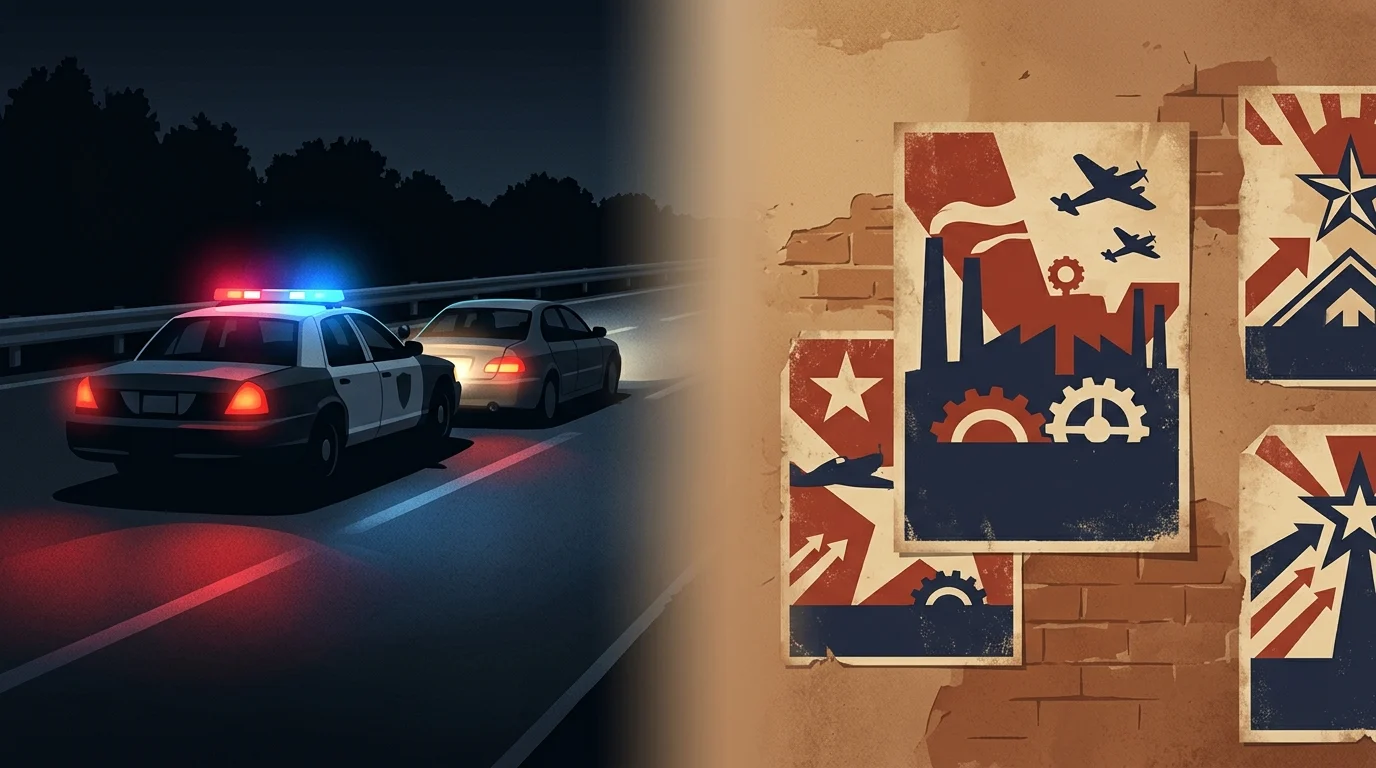
Quick Answer: OWI most commonly stands for “Operating While Intoxicated.” It is a legal term used in several U.S. states to describe the criminal offense of operating a motor vehicle while impaired by alcohol or drugs . You may also encounter OWI as the abbreviation for the Office of War Information, a U.S. government agency that operated during World War II .
Abbreviations can be confusing, especially when the same three letters mean entirely different things depending on where you see them. OWI is a perfect example. If you spot it on a police report or in a news story about a traffic stop, it almost certainly refers to impaired driving. If you come across it in a history book or an archival document, it likely points to a World War II-era government office. And in casual text messages, it may not have a standard meaning at all.
Understanding the context is everything when decoding OWI. The term carries serious legal weight in states like Wisconsin and Iowa, where it is the standard designation for drunk driving offenses . It also has historical significance tied to U.S. propaganda efforts during the 1940s . This article breaks down the primary meanings of OWI, explains how it differs from similar abbreviations like DUI and DWI, and answers common questions about what you need to know.
OWI Meaning in Law: Operating While Intoxicated
In legal and law enforcement contexts, OWI stands for Operating While Intoxicated. This is the term used in several U.S. states, most notably Wisconsin and Iowa, to describe the offense of operating a vehicle while under the influence of alcohol, controlled substances, or other intoxicating substances .
The key word here is “operating,” which is broader than “driving.” In many jurisdictions, you do not need to be actively moving the vehicle to be charged with OWI. Sitting behind the wheel with the engine running, or even being in physical control of a vehicle while impaired, can be sufficient under the law. This distinction is why some states prefer OWI over DUI or DWI.
Wisconsin law, for example, defines OWI offenses in detail. A person can be charged if they are operating a vehicle while under the influence of an intoxicant, with a prohibited alcohol concentration, or with a detectable amount of a restricted controlled substance in their blood . The state also has an “implied consent” law, meaning that anyone who drives on public roads is deemed to have consented to chemical testing if stopped by law enforcement .
Iowa similarly uses OWI as its standard term. The state’s law prohibits operating a motor vehicle while under the influence of alcohol or drugs, while having an alcohol concentration of .08 or higher, or while any amount of a controlled substance is present in the person . Penalties escalate based on the number of prior convictions within a lookback period .
How OWI Differs from DUI and DWI
If you are wondering why some states say OWI while others say DUI or DWI, the answer comes down to legal terminology and jurisdiction. All three abbreviations describe impaired driving, but they are not always interchangeable in a legal sense.
| Abbreviation | Full Meaning | Common Usage |
|---|---|---|
| OWI | Operating While Intoxicated | Wisconsin, Iowa, Indiana |
| DUI | Driving Under the Influence | Most U.S. states |
| DWI | Driving While Intoxicated | Many U.S. states |
| OUI | Operating Under the Influence | Some states, such as Massachusetts |
The practical difference often lies in how each state defines “operating” or “driving.” Some states draw a line between being in physical control of a vehicle and actively driving it. Others treat the terms as legally equivalent. If you are facing a charge, the exact abbreviation matters less than the specific statute in your state .
OWI as the Office of War Information
Outside of legal contexts, OWI has a significant historical meaning. The Office of War Information (OWI) was a United States government agency created on June 13, 1942, during World War II . Its purpose was to centralize and control the content and production of government information and propaganda about the war.
The OWI coordinated the release of war news for domestic use and worked to promote patriotism, warn about foreign spies, and encourage support for the war effort. It used posters, radio broadcasts, films, and photographs to communicate with the American public . One of its most famous campaigns was the “careless talk” series of posters, which warned citizens that loose lips could leak sensitive information to the enemy .
The agency ceased operation in September 1945, following the end of the war . Today, OWI appears primarily in historical documents, museum archives, and academic discussions of wartime propaganda.
Other Possible Meanings of OWI
While Operating While Intoxicated and Office of War Information are the two most prominent meanings, OWI has a few other uses depending on the field:
- Online Writing Instruction: A term used in education for teaching writing in online environments .
- Oracle Wait Interface: A technical term in database administration .
- One Wire Interface: A type of digital communication protocol .
In casual text messages, OWI does not have a widely recognized standard meaning. Unlike abbreviations such as LOL or BRB, OWI is not commonly used as a texting shorthand. If you see it in a text without any legal or historical context, it may be a typo or a personal abbreviation understood only by the sender .
Frequently Asked Questions
What does OWI stand for in legal terms?
OWI stands for “Operating While Intoxicated.” It is a charge used in some U.S. states for the offense of operating a vehicle while impaired by alcohol or drugs .
Is OWI the same as DUI?
They refer to similar offenses, but the terminology depends on the state. OWI is used in states like Wisconsin and Iowa, while DUI is more common nationally. The legal definitions of “operating” versus “driving” can also differ between jurisdictions .
What was the Office of War Information?
The Office of War Information was a U.S. government agency during World War II that coordinated wartime propaganda and information distribution. It operated from 1942 to 1945 .
Can you be charged with OWI without actually driving?
In many states that use OWI, yes. The offense is defined as “operating” a vehicle, which can include being in physical control of a vehicle with the engine running, even if it is not moving .
What are the penalties for an OWI conviction?
Penalties vary by state and by whether it is a first or subsequent offense. In Iowa, a first offense is a serious misdemeanor with a minimum of 48 hours in jail and a fine of $1,250, while subsequent offenses carry harsher penalties . Wisconsin has its own escalating penalty structure .
Does an OWI affect professional licenses?
It can. In states like Iowa and Michigan, a conviction may trigger a separate review by professional licensing boards. Nurses, doctors, and other licensed professionals may face discipline ranging from a warning to license suspension or revocation .
Conclusion
The meaning of OWI depends entirely on where you encounter it. In a legal or traffic context, it almost always means Operating While Intoxicated, a serious charge that carries real consequences in states like Wisconsin and Iowa. In a historical or archival context, it refers to the Office of War Information, the World War II agency that shaped American public messaging during the 1940s. And in casual conversation, it may have no fixed meaning at all.
If you are dealing with an OWI charge or reviewing a legal document, the safest approach is to consult the specific laws of your state and, if necessary, seek legal advice. If you are simply curious about an abbreviation you saw, checking the surrounding context will usually give you the answer. Now that you know what OWI means, you can read it with confidence the next time it appears.

James Wilson is a creative writer who specializes in trendy captions, social media quotes, and expressive words. He aims to make it easier for readers to find fresh, meaningful captions that stand out online.