
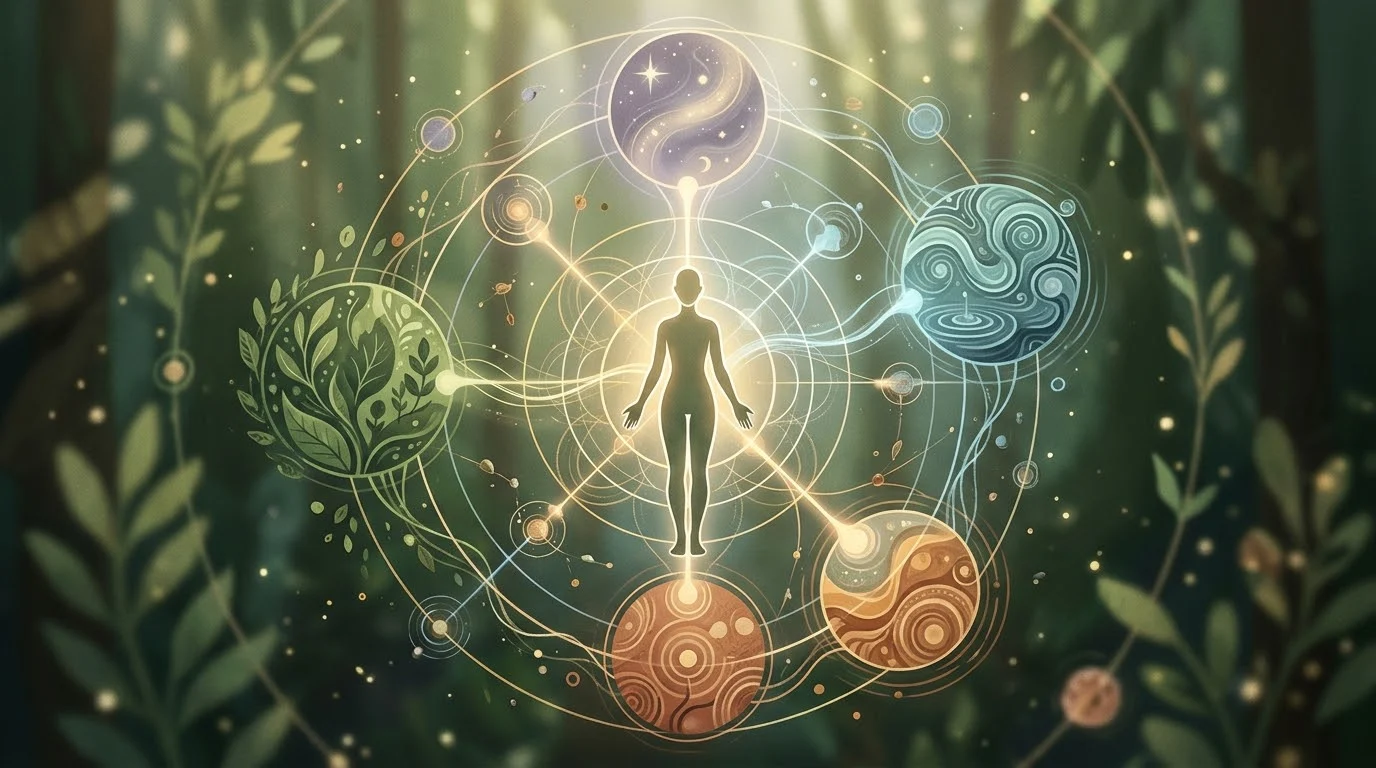
Quick Answer: Holistic means relating to or concerned with complete systems rather than with individual parts. It describes an approach that considers the whole person, organism, or situation, recognizing that the whole is more than just the sum of its parts . In healthcare, a holistic approach treats the physical, mental, emotional, and social aspects of a person together, rather than focusing only on a specific symptom or disease .
The word holistic has become increasingly common in conversations about health, wellness, education, and even business. You will hear people talk about holistic medicine, holistic healing, and holistic approaches to problems. But what does holistic actually mean, and why has it become such a popular concept? Understanding the definition is the first step toward grasping why this perspective matters and how it differs from more fragmented ways of thinking.
From a clinical and academic perspective, the holistic view holds that a whole system cannot be fully understood by examining its parts in isolation. The parts are interconnected, and their roles can only be explained by reference to the whole they belong to . This principle applies across disciplines. In medicine, it means treating the patient as a person rather than a collection of symptoms. And in education, it means recognizing that a child is more than their exam results. In ecology, it means viewing humans and the environment as a single system . This article breaks down the meaning of holistic, explores its applications in different fields, and addresses common questions about what it means to take a holistic approach.
What Does Holistic Mean?
The most straightforward definition of holistic is relating to or concerned with complete systems rather than with individual parts . The term comes from the Greek word holos, meaning “whole.” When something is described as holistic, it is being viewed as an integrated entirety, with attention to how the components interact and contribute to the functioning of the whole .
It is worth noting that holistic is not the same as “wholistic,” though the two are often used interchangeably in everyday language. Some scholars, particularly in Indigenous contexts, argue that “wholistic” carries a distinctive meaning that better reflects Indigenous ways of knowing, including the coming together of physical, spiritual, emotional, and mental elements of wellbeing . Within standard English usage, however, holistic is the more common spelling and is widely understood to mean the same thing: an approach that considers the whole.
The word is an adjective. You might describe a doctor as having a holistic approach, a treatment plan as holistic, or a philosophy as holistic. In each case, the implication is that the perspective is broad and integrated rather than narrow and fragmented.
Holistic in Healthcare and Medicine
The most common context in which people encounter the word holistic is healthcare. Holistic medicine is an approach to patient care in which the physiological, psychological, and social factors of the patient’s condition are taken into account, rather than just the diagnosed disease . This stands in contrast to a strictly reductionist model that might treat a symptom without considering the broader context of the person experiencing it.
The principles of holistic medical practice include several core ideas. Optimal health is seen as the conscious pursuit of the highest level of functioning and balance across physical, environmental, mental, emotional, social, and spiritual aspects of human experience . The body is believed to have an innate power to heal itself, and the practitioner’s role is to help patients utilize that capacity . Each patient is viewed as a unique individual whose illness must be understood within the context of their life, not just their biology .
Holistic healthcare practitioners may integrate multiple treatment modalities. These can include lifestyle modification, complementary approaches, and conventional drugs and surgery, selected to best meet the unique needs of the patient . The emphasis is often on using the least invasive and most natural interventions whenever possible, while still drawing on the full range of safe and effective options .
It is important to understand that holistic medicine does not reject conventional medicine. Rather, it seeks to integrate appropriate therapeutic approaches from diverse traditions into a whole-systems approach that addresses the person as a complete being . The goal is not just a medical cure, but a deeper healing of the patient on their own terms .
Holistic Beyond Medicine: Education, Ecology, and More
The concept of holism extends far beyond healthcare. The same principle, that a whole is more than the sum of its parts, applies to many fields.
In education, a holistic approach recognizes that a child is more than the sum of their exam results . It considers the intellectual, emotional, social, and physical development of the student together, rather than focusing narrowly on academic achievement alone.
In ecology, a holistic perspective views humans and the environment as a single interconnected system . This way of thinking is essential for understanding complex environmental problems, where actions in one area can have far-reaching consequences in another.
In engineering and ontology, the holistic perspective considers each part of a whole as equally important, without necessarily positioning the parts within a rigid hierarchy . The interest is on the whole object and on how its parts contribute to the functioning of that whole, rather than on isolating individual components for analysis.
What these applications share is a commitment to seeing systems as integrated wholes. Whether the system is a human body, a classroom, an ecosystem, or a machine, the holistic view insists that understanding requires attention to the relationships and interactions between parts, not just the parts themselves.
The Opposite of Holistic
To understand what holistic means, it helps to understand what it is not. The opposite of a holistic approach is often called a reductionist or atomistic approach. Reductionism seeks to understand complex systems by breaking them down into their smallest components and studying those components in isolation.
Neither approach is inherently right or wrong. In fact, the holistic perspective is not exclusive of the reductionistic perspective; it can be considered its complement . Some problems are best solved by examining individual parts in detail, while others require a broader view of how those parts interact. A skilled practitioner or thinker knows when to zoom in and when to zoom out.
In healthcare, for example, a surgeon repairing a damaged artery must focus on that specific part. But the decision to operate, the timing, and the recovery plan all benefit from a holistic view of the patient’s overall health, lifestyle, and goals. The two perspectives work together.
Frequently Asked Questions
What does holistic mean in simple terms?
Holistic means looking at a whole system rather than just its individual parts. In health, it means treating the whole person, including their body, mind, emotions, and social circumstances, rather than focusing only on a specific symptom or disease .
What is the difference between holistic and holistic medicine?
Holistic is a general adjective describing an approach concerned with wholes. Holistic medicine is a specific application of that approach to healthcare, where practitioners consider the physical, psychological, and social factors of a patient’s condition together .
Is holistic the same as alternative medicine?
No. Holistic describes an approach or perspective. Alternative medicine refers to treatments used instead of conventional medicine. Holistic medicine can include conventional treatments as well as complementary approaches, selected based on what best serves the whole patient .
What does a holistic approach mean in everyday life?
In everyday life, a holistic approach means considering the broader context of a situation rather than focusing narrowly on one aspect. For example, a holistic approach to wellness might consider diet, sleep, stress, relationships, and physical activity together, rather than trying to fix a single habit in isolation.
Why is holistic spelled with a “w” sometimes?
“Wholistic” is a variant spelling that some scholars and Indigenous communities prefer, arguing that it more accurately reflects the idea of wholeness and is more inclusive of Indigenous ways of knowing that encompass physical, spiritual, emotional, and mental elements . In standard usage, holistic is the more common spelling.
Can a treatment be holistic and scientific at the same time?
Yes. Holistic medicine is informed by evidence and makes use of all appropriate therapeutic approaches . The holistic perspective does not reject scientific methods; it simply insists that scientific reductionism alone is not always sufficient for understanding health, healing, and human experience.
Conclusion
The meaning of holistic is straightforward on its surface: concerned with wholes rather than parts. But the implications of that definition are profound. Whether applied to medicine, education, ecology, or daily life, a holistic approach asks us to see systems as integrated and interconnected, to recognize that the relationships between parts matter as much as the parts themselves, and to resist the temptation to reduce complex problems to isolated variables.
Understanding what holistic means gives you a foundation for clearer thinking about health and wellbeing. It helps you recognize when an approach is genuinely considering the whole picture and when it is focusing too narrowly on a single symptom or factor. And it invites you to consider how a more integrated perspective might benefit your own life, whether you are making decisions about healthcare, education, or how you understand the world around you.
The next time you encounter the word holistic, you will know it is more than a wellness buzzword. It is a way of seeing that has deep roots in philosophy, science, and healing traditions, and it offers a valuable counterbalance to the fragmentation that so often characterizes modern life.

James Wilson is a creative writer who specializes in trendy captions, social media quotes, and expressive words. He aims to make it easier for readers to find fresh, meaningful captions that stand out online.